
Many of us have had the good fortune to know some animals as individuals. We care for the animals we share our house with and we get to know their personality and their wants and needs. We form emotional bonds with animals and even see them as members of our family. Most people really care about animals.
While we will go out of our way to care for a dog or a cat, most of us have a completely different relationship to the animals we eat, such as cows, pigs, chickens and fishes. Yet, like dogs and cats, these animals also have the capacity to feel emotions like joy and pain, bonding and loss. Most of us believe that unnecessary violence against animals is unacceptable, so why do we eat and wear animals and exploit them in other ways? Humans do not need to eat or use animal products in order to live well, so why do we continue to treat animals as resources for human use?
"If we could live happy and healthy lives without harming others, why wouldn't we?"
- Edgar's Mission
This ability for humans to divide other animals into these two categories - those we love and those we eat - has been described variously as cognitive dissonance, moral schizophrenia, carnism or speciesism. Each of these terms tries to describe how and why people, who otherwise care about animals, justify the use of animals for food, clothing, entertainment and other purposes. Once we become aware of how our history and culture has shaped us in this way and we understand that humans have no need to kill or exploit animals, we are well on the way to becoming vegan.
"We have so many alternatives that don't involve using animals as our things. Using animal products is unnecessary, it harms animals, and it inevitably makes us responsible for the killing of a sentient being - whose life is the only life that being has - for transparently trivial reasons."
- Eric Prescott
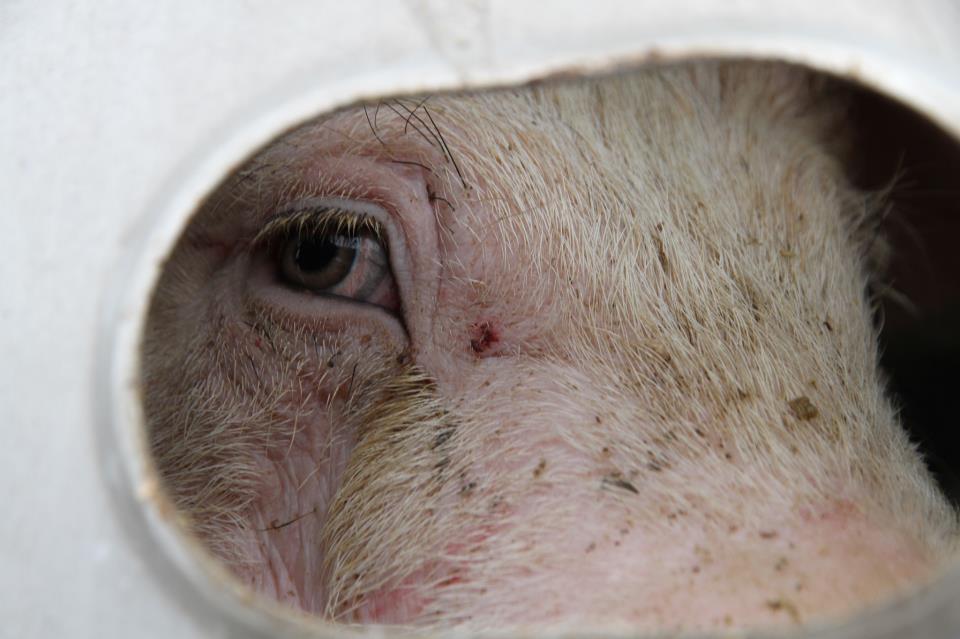
The animal industries work hard to convince us that the animals we eat live freely on small family farms. In truth, most spend their entire lives confined in crowded, windowless sheds or barren enclosures, viewed simply as commodities. Even animals raised under so-called 'humane' or 'free-range' labels are still treated as property and are ultimately transported to the same slaughterhouses. Consuming animals marketed as 'happy' or 'ethical' does not change the fundamental injustice of breeding, exploiting and killing sentient beings for profit and human preference. Regardless of how they are raised, animals value their own lives and are not ours to use.
In Australia, over 500 million land animals are confined and killed every year for food. This means that, on average, more than 15 land animals are killed every second.
"Humans have no need for animal products, and the increasing number of vegans on the planet is a testament to how easy it is to live a healthy, fulfilling life without participating in the systematic abuse and unnecessary killing that goes on in the animal industry every day."
- Angel Flinn
Cows farmed for their milk are repeatedly impregnated and their babies are taken away from them soon after birth, destined either for immediate killing or for a short life before slaughter. The cows themselves are killed after only a few years, when their milk production is no longer considered economical.
Chickens farmed for their eggs are confined in cages or crowded sheds. They have been selectively bred to lay eggs at an unnaturally high rate, placing immense strain on their bodies. Male chicks, considered economically worthless by the industry, are killed shortly after hatching, commonly by gassing or maceration.
Like animals used for food, sheep farmed for wool are considered property and are bred as products for human use. When animals are treated as products, their lives and interests inevitably become secondary to human use and profit. Selective breeding has resulted in many individual sheep developing folds of skin that attract flies to lay eggs. To reduce 'flystrike', farmers cut off sections of skin from the sheep, often without pain relief, in a painful procedure known as 'mulesing'. Like other farmed animals, these sheep are killed once their 'productivity' declines.
Farmed animals are treated as property and resources for human use. Because they are viewed as commodities, their lives and interests are routinely sacrificed for efficiency and profit. The result is a system characterised by confinement, deprivation, mutilation and premature killing.
The animals we use and eat do not live comfortably on idyllic farms, as some honest research will quickly reveal. The flesh on your plate comes from the body of a sentient being who valued their own life and who did not willingly give it up to you. There is a better way, for both humans and our fellow animals.
"The time will come when men such as I will look upon the murder of animals as they now look upon the murder of men."
- Leonardo DaVinci
Well documented examples of the suffering routinely caused to animals used for food are numerous and easy to find. These examples reflect standard farming practices, not merely isolated acts of cruelty. The problem is not simply that some animals are treated badly, but that sentient beings are treated as commodities to be used and killed for human purposes. Below are some links to more information.
The following resources may help you better understand veganism and the rights of animals.
Unsubscribe at any time. Your details are safe, refer to our privacy policy.
© Vegan Australia | Registered as a non-profit charity by the ACNC | ABN 21 169 219 854